The Maroons
The Jamaican Maroons Arrive
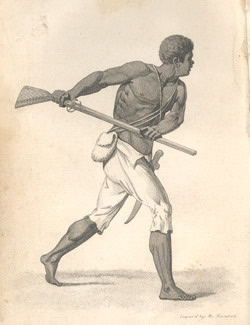
From the time of British conquest in 1655, the Maroons in Jamaica waged war against the British colonizers of the island. The Jamaican Government succeeded in overcoming the Maroons in 1796, after 140 years of intermittent warfare, and subsequently deported one group of defeated Maroons (Trelawney) to Halifax.
On June 26, 1796, the ships Dover, Mary, and Anne sailed from Port Royal Harbour in Jamaica, bearing 543 men, women and children. The Commander-in-Chief of the British Army in North America was impressed with the proud bearing and other characteristics of the Maroons when they arrived in Halifax, so he employed the entire group to work on the new fortifications at Citadel Hill. The Lieutenant-Governor Sir John Wentworth believed the Maroons would be good settlers. He was ordered by the Duke of Portland to settle the Maroons in Nova Scotia.
The government of Jamaica extended a credit of 25,000 Jamaican pounds to help settle the Maroons, of which 3,000 pounds was expended on 5,000 acres of land to build the community of Preston. Governor Wentworth was also granted an allowance of 240 pounds annually from England to provide religious instruction and schooling for the community.
Facing the harshness of the Canadian climate and the unsuitability of farming to their trained military dispositions, the Maroons soon became less tolerant of the conditions in which they were living.
The Maroons Depart
The winters of 1796-98 were very severe. The Maroons suffered discomfort and grew restive and angry at their situation.
In the spring of 1799, Governor Wentworth felt obliged to dispatch Captain Solomon and 50 men of the Royal Nova Scotia Regiment to Preston where they withheld supplies from the most refractory so as to maintain order. Meanwhile, Wentworth became increasingly disillusioned with the Maroons as settlers, and the money from the Jamaican government for their support was wearing very thin. The Maroons were not in favour of the suggested ways of supporting themselves in Canada and seemed likely to become a charge on the public purse.
Governor Wentworth, in accordance with the demands of the Maroons, concluded the best resolution would be to remove them from Nova Scotia to Sierra Leone in Africa.
Although the majority of the Maroons left Nova Scotia, there were a few who remained: a census done in 1817 of the Black community of Tracadie in Guysborough revealed that several persons living there were descendants of the Maroons. The Maroons also left descendents in the Preston Area of Halifax County.
References
- Grant, John. "Black Nova Scotians" pg. 15-16